Astro
Guru Nanak Dev Ji: The First Sikh Guru Who Preached the Message of One Humanity

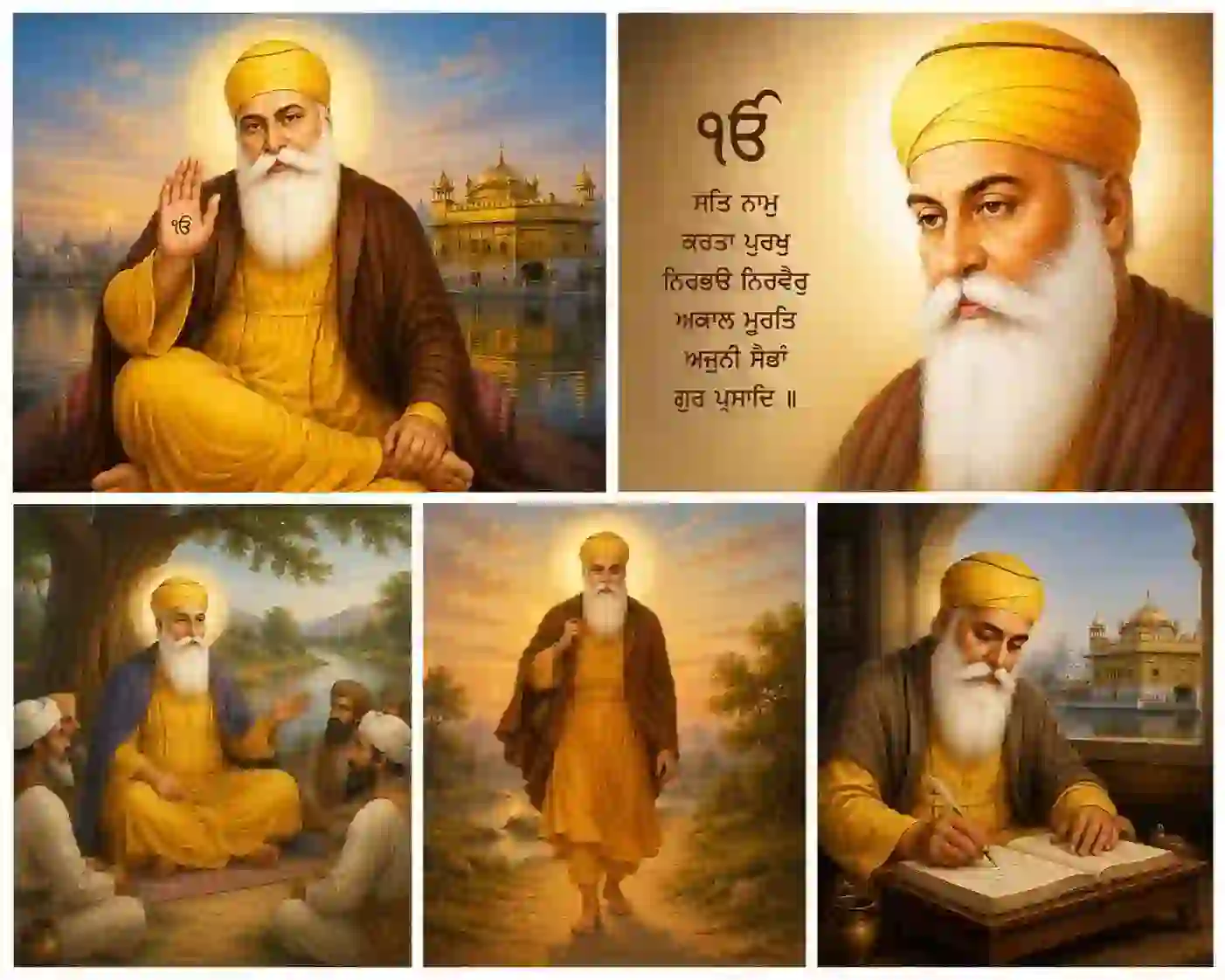
Guru Nanak Dev Ji, the founder of Sikhism and the first of the ten Sikh Gurus, remains one of the most influential spiritual figures in South Asian history. His teachings centred on the oneness of God, equality among human beings, honest living, compassion and remembrance of the Divine.
Born in 1469 at Rai-Bhoi-di Talwandi, now known as Nankana Sahib in present-day Pakistan, Guru Nanak Dev Ji displayed a deeply contemplative nature from an early age. According to Sikh historical tradition, his questions about spirituality, society and the purpose of human life distinguished him from those around him.
Early Life and Family
Guru Nanak Dev Ji was born to Mehta Kalyan Das, popularly known as Mehta Kalu Ji, and Mata Tripta Ji. His elder sister was Bebe Nanaki Ji, who played an important role in his early life and was among the first to recognise his spiritual greatness.
Guru Nanak Dev Ji later married Mata Sulakhni Ji. They had two sons, Sri Chand and Lakhmi Das. Despite living the life of a householder, Guru Nanak Dev Ji continued to pursue a deeply spiritual path and emphasised that spiritual life did not require abandoning one’s responsibilities.
The Beginning of a Spiritual Mission
Around the age of 38, Guru Nanak Dev Ji began a life dedicated to spreading his spiritual message. He challenged religious divisions, empty rituals, social inequality and the caste system.
His message emphasised the existence of one universal Creator and the equality of humanity. Rather than focusing on divisions based on religion, caste, status or social position, Guru Nanak Dev Ji encouraged people to recognise the Divine presence in all human beings.
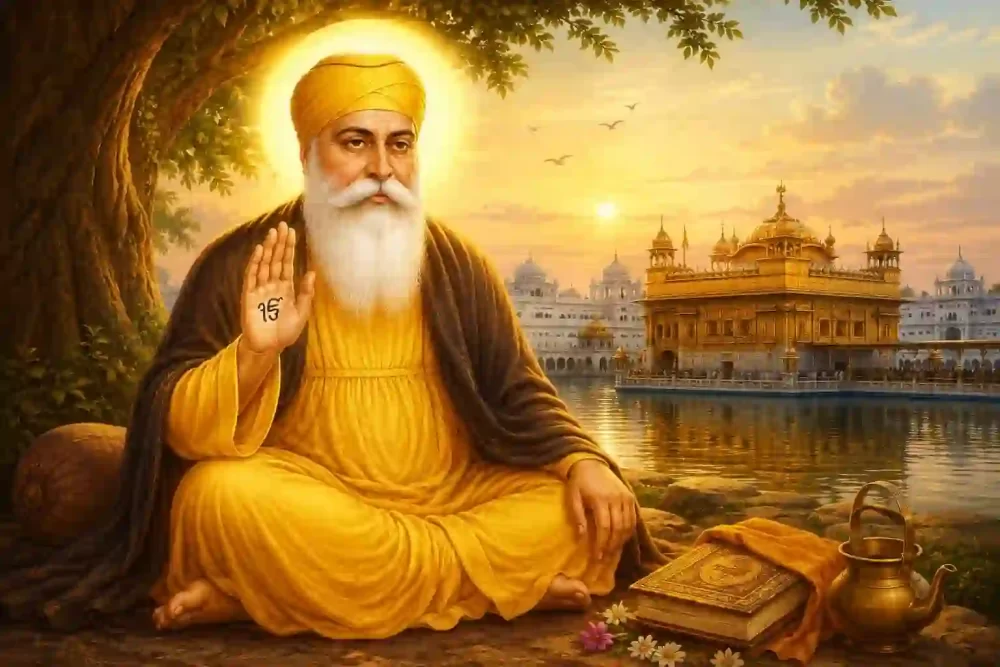
Guru Nanak Dev Ji: The First Sikh Guru Who Preached the Message of One Humanity
The Four Udasis of Guru Nanak Dev Ji
Guru Nanak Dev Ji undertook four major journeys, traditionally known as the Char Udasis, travelling across large parts of the Indian subcontinent and beyond. These journeys are traditionally described as lasting nearly two decades.
During these travels, he visited numerous religious and cultural centres and engaged with people belonging to different faiths and traditions. His objective was not simply to travel but to communicate a message of spiritual truth, equality and devotion to the One God.
His journeys helped spread his teachings to communities far beyond Punjab and established a wider network of followers and centres.
Three Core Principles of Guru Nanak Dev Ji
Guru Nanak Dev Ji’s teachings are often summarised through three important principles:
1. Naam Japo – Remember the Divine
Naam Japo encourages remembrance and meditation on God’s Name. Through devotion and spiritual discipline, an individual can overcome ego and other negative tendencies and develop a more compassionate and truthful life.
2. Kirat Karo – Earn Honestly
Kirat Karo teaches people to earn their livelihood through honest work. Guru Nanak Dev Ji emphasised the dignity of labour and responsible living rather than exploitation or dishonest gain.
3. Vand Chhako – Share With Others
Vand Chhako encourages people to share their earnings, food and resources with others, particularly those in need. It reflects the values of generosity, community and social responsibility.
Together, these principles connect spirituality with everyday life: remember God, work honestly and share with others.
His Message of Equality
One of Guru Nanak Dev Ji’s most enduring contributions was his emphasis on human equality.
He challenged caste-based discrimination and opposed social practices that treated people differently because of their birth or social position. He also spoke about the dignity and equality of women and marginalised communities.
His teachings placed humanity, humility, service and devotion at the heart of spiritual life.
Guru Nanak Dev Ji and the Guru Granth Sahib
Guru Nanak Dev Ji was also a prolific spiritual poet. According to the Shiromani Gurdwara Parbandhak Committee (SGPC), 974 hymns attributed to Guru Nanak Dev Ji are included in Sri Guru Granth Sahib Ji. His compositions include revered works such as Japji Sahib, Asa Di Var, Bara Mah and Siddh Gosht.
His hymns continue to be recited and sung by Sikhs around the world, carrying his message of devotion, truth, humility and equality across generations.
Kartarpur: The Final Chapter
After his extensive travels, Guru Nanak Dev Ji eventually settled at Kartarpur, where he spent the final years of his life. There, he continued his spiritual teachings while living as a householder and farmer.
The community at Kartarpur became an important centre of Sikh life. Kirtan, meditation, honest work and Langar became central elements of the community.
Before his passing, Guru Nanak Dev Ji selected Bhai Lehna Ji, later known as Guru Angad Dev Ji, as his successor. Guru Angad Dev Ji became the second Sikh Guru, continuing the spiritual tradition established by Guru Nanak Dev Ji.
Guru Nanak Dev Ji passed away at Kartarpur on 22 September 1539.
The Mool Mantar: A Foundation of Sikh Belief
The opening declaration of Sri Guru Granth Sahib Ji begins with the profound expression:
Ik Onkar, Satnam, Karta Purakh, Nirbhao, Nirvair, Akaal Moorat, Ajooni, Saibhang, Gur Prasad.
The Mool Mantar expresses the Sikh understanding of the One Divine Reality – the Creator, without fear or enmity, timeless, unborn and self-existent, realised through the Guru’s grace.
A Message That Continues Beyond Time
More than five centuries after Guru Nanak Dev Ji’s birth, his message continues to resonate across cultures and communities.
His teachings remind humanity that spirituality is not merely about rituals or religious identity. It is also about how people treat one another, how honestly they live, how generously they share and how sincerely they remember the Divine.
Guru Nanak Dev Ji’s vision of one Creator and one humanity remains one of his most enduring legacies.
His message can be summed up simply: remember the Divine, earn through honest work, share with others and treat every human being with dignity and equality.
Frequently Asked Questions (FAQ)
Who was Guru Nanak Dev Ji?
Guru Nanak Dev Ji was the first of the ten Sikh Gurus and the central spiritual figure in the emergence of Sikhism. His teachings emphasised devotion to one God, equality, honest living and service to humanity.
When and where was Guru Nanak Dev Ji born?
Guru Nanak Dev Ji was born in 1469 at Rai-Bhoi-di Talwandi, now known as Nankana Sahib in Pakistan.
What are the three main teachings of Guru Nanak Dev Ji?
The three commonly associated principles are Naam Japo (remember the Divine), Kirat Karo (earn through honest work) and Vand Chhako (share with others).
What was Guru Nanak Dev Ji’s message of equality?
Guru Nanak Dev Ji taught that all human beings are equal and challenged discrimination based on caste, status and social divisions. His teachings emphasised dignity, humility and compassion.
What were the Four Udasis of Guru Nanak Dev Ji?
The Four Udasis were four major journeys traditionally associated with Guru Nanak Dev Ji. During these journeys, he travelled to different regions and shared his spiritual teachings with people of diverse religious and cultural backgrounds.
Where did Guru Nanak Dev Ji spend his final years?
Guru Nanak Dev Ji spent his final years at Kartarpur, where he established a community centred on prayer, kirtan, honest work and Langar.
Who succeeded Guru Nanak Dev Ji?
Bhai Lehna Ji, later known as Guru Angad Dev Ji, was chosen by Guru Nanak Dev Ji as his successor. He became the second Sikh Guru.
When did Guru Nanak Dev Ji die?
Guru Nanak Dev Ji passed away at Kartarpur on 22 September 1539.
What is the Mool Mantar?
The Mool Mantar is the foundational statement of Sikh belief that begins with “Ik Onkar”, expressing the belief in one universal Divine Reality.
Why is Guru Nanak Dev Ji remembered today?
Guru Nanak Dev Ji is remembered for his enduring message of one Creator, equality, honest work, sharing, humility, compassion and service to humanity.