Tech
India Semiconductor Manufacturing 2026: Can India Become a Global Chip Hub?

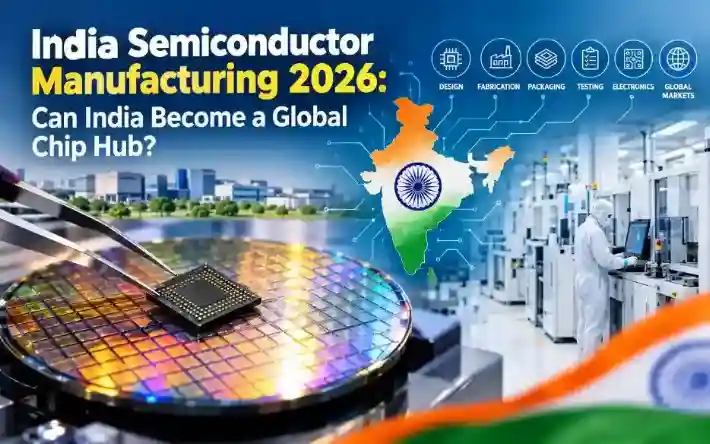
India semiconductor manufacturing is entering a new phase as the country expands its semiconductor ecosystem with fabrication facilities, chip packaging and testing plants, technology partnerships and large-scale investments. Semiconductors are now strategically important to smartphones, electric vehicles, artificial intelligence, defence systems, data centres and almost every area of modern electronics.
For India, building a domestic semiconductor industry is about more than manufacturing chips. It is about strengthening supply-chain resilience, developing advanced technology capabilities, creating high-value jobs and establishing the country as an important participant in the global electronics and technology ecosystem.
The key question is no longer whether India wants to build a semiconductor industry, but how quickly it can move from approved projects and ecosystem development to sustained commercial production-and whether that foundation can eventually support a globally competitive semiconductor hub.
Key Takeaways
- India is building a semiconductor ecosystem spanning chip design, fabrication, packaging and testing.
- The government said in July 2026 that 12 semiconductor manufacturing units had been approved, representing more than ₹1.64 lakh crore of cumulative investment.
- Micron, Kaynes and CG Semi had started commercial production by July 2026, according to the government.
- Tata Electronics is developing a major 300 mm semiconductor fab at Dholera, Gujarat, in partnership with Powerchip Semiconductor Manufacturing Corporation (PSMC).
- Micron opened its semiconductor assembly and test facility at Sanand, Gujarat, in February 2026.
- India is simultaneously trying to strengthen semiconductor design, equipment, talent, packaging and supporting supply chains.
- The government’s Semicon 2.0 programme, approved in July 2026, has a stated budget outlay of ₹1,27,500 crore.
Why Semiconductor Manufacturing Matters to India
Semiconductors are the basic building blocks of modern digital technology.
They power:
- Smartphones and computers
- Artificial intelligence systems
- Data centres
- Electric vehicles
- Automotive electronics
- Telecommunications equipment
- Industrial automation
- Defence and aerospace systems
- Medical devices
- Consumer electronics
- Internet of Things devices
The increasing use of AI is adding another layer of demand. AI data centres require large quantities of advanced computing, memory and networking hardware, while increasingly sophisticated vehicles and industrial systems depend on semiconductor components.
This makes semiconductor manufacturing strategically important for countries seeking greater control over critical technology supply chains.
For India, the opportunity extends beyond making silicon chips. A complete semiconductor ecosystem can include chip design, intellectual property, electronic design automation tools, semiconductor equipment, materials, wafer fabrication, assembly, testing, packaging, logistics and downstream electronics manufacturing.
India’s Semiconductor Manufacturing Push
India’s semiconductor programme has moved from policy announcements toward physical manufacturing capacity.
India’s semiconductor manufacturing push is being driven by the India Semiconductor Mission (ISM), along with policy support for semiconductor fabs, assembly and testing facilities, chip design and the wider electronics ecosystem. The initiative is intended to build domestic capabilities across the semiconductor value chain and attract investment in manufacturing and technology.
According to the Government of India, 12 manufacturing units had been approved under the earlier semiconductor programme by July 2026, with cumulative investment exceeding ₹1.64 lakh crore. These included silicon and silicon-carbide fabrication, an integrated gallium-nitride/micro-LED facility and nine packaging units.
The approved projects span several states, including Gujarat, Assam, Odisha, Uttar Pradesh, Punjab and Andhra Pradesh. A government document listing the approved projects includes facilities by Micron, Tata Electronics, CG Power, Kaynes Technology, Vama Sundari Investments, 3D Glass Solutions, SiCSem, Continental Device India and others.
This geographic spread is important because a semiconductor ecosystem requires more than a single fabrication plant. It needs suppliers, equipment, chemicals, packaging, testing, logistics, utilities, engineering talent and downstream customers.
From Chip Design to Fabrication and Packaging
The semiconductor value chain can broadly be divided into several stages:
Chip design → wafer fabrication → assembly → packaging → testing → electronics manufacturing
India has historically been particularly strong in semiconductor design and engineering services.
The manufacturing push is intended to complement that existing strength by adding more physical production capabilities.
What is a semiconductor fab?
A fabrication plant, or fab, manufactures integrated circuits on semiconductor wafers.
The process involves highly controlled environments, sophisticated lithography and materials-processing equipment, extremely precise manufacturing processes and extensive testing.
A fab therefore requires enormous capital investment and a complex ecosystem of suppliers and technical expertise.
What are OSAT facilities?
OSAT stands for Outsourced Semiconductor Assembly and Test.
OSAT facilities generally take semiconductor dies or wafers and perform processes such as assembly, packaging and testing before finished semiconductor products enter downstream applications.
This is a critical part of the semiconductor value chain and can provide an important entry point for countries developing their semiconductor manufacturing capabilities.
Micron’s Sanand Facility Marks a Major Manufacturing Milestone
One of the most visible developments in India’s semiconductor ecosystem is Micron’s facility at Sanand in Gujarat.
Micron formally celebrated the opening of its semiconductor assembly and test facility on February 28, 2026. The company said the facility had begun commercial production and was producing memory modules using DRAM and NAND products from Micron’s global manufacturing network.
Micron said the first phase of the Sanand facility would include more than 500,000 square feet of cleanroom space. It also said the facility is expected to assemble and test tens of millions of chips in 2026, scaling to hundreds of millions in 2027 as operations ramp up.
The facility is significant because it represents a move from semiconductor policy and project approvals toward actual commercial semiconductor manufacturing activity in India.
Tata Electronics and the Dholera Semiconductor Fab
Tata Electronics is developing a major semiconductor fabrication facility at Dholera in Gujarat.
The government-approved project has an investment value of ₹91,526 crore and planned capacity of approximately 50,000 wafer starts per month, according to the government’s project list.
Tata Electronics says the 300 mm fab is being developed with technology support from PSMC of Taiwan and is intended to manufacture semiconductors for applications including automotive, mobile devices and artificial intelligence. The company has said the planned investment is approximately US$11 billion.
In May 2026, Tata Electronics and ASML announced a strategic partnership covering lithography equipment, training, supply-chain development and R&D infrastructure for the Dholera fab.
The partnership illustrates an important reality of semiconductor manufacturing: building a fab requires collaboration across an international technology and equipment ecosystem.
Tata Electronics and Nexperia Expand the Semiconductor Value Chain
Another significant development came in September 2026, when Tata Electronics and Nexperia announced a strategic partnership spanning wafer fabrication, assembly and testing, technology collaboration and ecosystem development.
The companies said the collaboration includes groundwork for manufacturing Nexperia’s MOSFET portfolio at Tata Electronics’ upcoming 300 mm Dholera fab.
The partnership also includes assembly and testing of Nexperia’s discrete semiconductor products at Tata Electronics’ packaging facility in Jagiroad, Assam.
This is significant because it connects multiple parts of the semiconductor value chain rather than treating fabrication and packaging as isolated activities.
Kaynes Semicon and the Rise of Semiconductor Packaging
India’s semiconductor strategy is not limited to large wafer fabs.
Advanced packaging and testing are also becoming increasingly important.
Kaynes Semicon has developed a semiconductor assembly and testing platform at Sanand, Gujarat. Its facility covers areas including OSAT, packaging technology, testing and validation.
Kaynes also reported the rollout of India’s first commercially manufactured multi-chip module in 2025 from its Sanand OSAT facility.
The company’s Sanand facility is designed for substantial production capacity as operations scale.
Packaging is increasingly important as chip architectures become more sophisticated. Advanced packaging can allow multiple dies or components to be integrated into a single package, supporting performance and efficiency requirements in applications such as AI, automotive electronics and high-performance computing.
CG Power and Other Semiconductor Projects
CG Power and Industrial Solutions is another company participating in India’s semiconductor manufacturing push.
The government-approved CG Power project in Gujarat has an investment value of ₹7,584 crore and involves partnerships with Renesas Electronics America and Stars Microelectronics.
Other approved semiconductor projects include facilities in:
- Odisha
- Uttar Pradesh
- Punjab
- Andhra Pradesh
- Assam
- Gujarat
The range of projects reflects the growing effort to create semiconductor capabilities across different parts of India rather than concentrating the entire ecosystem in a single location.
Semicon 2.0: India’s Next Phase
In July 2026, the Union Cabinet approved Semicon 2.0, a long-term programme intended to build on India’s semiconductor ecosystem.
The programme has a stated budget outlay of ₹1,27,500 crore and is designed around six pillars covering areas including design and manufacturing.
The government said that 105 startups had already begun developing chips and that 105 startups/MSMEs had been granted access to industry-standard electronic design automation tools.
This is important because semiconductor manufacturing cannot develop independently from chip design.
A sustainable ecosystem requires companies that can design products, manufacture them, package and test them, and ultimately sell them into global and domestic markets.
India’s Strength in Semiconductor Design
India’s semiconductor opportunity extends well beyond fabrication.
The country has a large engineering and software talent base, and multinational semiconductor companies have maintained significant design and engineering operations in India.
Chip design is particularly important because it can create intellectual property and high-value engineering capabilities even before large-scale domestic fabrication reaches maturity.
The next stage is to connect this design capability more closely with:
- Domestic manufacturing
- Semiconductor packaging
- Testing infrastructure
- Equipment development
- Materials
- Research institutions
- Indian electronics manufacturers
- Global chip companies
That connection could determine how much value India ultimately captures across the semiconductor value chain.
The Role of AI, EVs and Data Centres
Three major technology trends are particularly relevant to India’s semiconductor ambitions: AI, electric vehicles and data centres.
Artificial intelligence
AI workloads require increasingly powerful processors, memory and networking components.
The rapid expansion of AI infrastructure globally is therefore increasing the strategic importance of semiconductor supply chains.
Electric vehicles
EVs use semiconductors for battery management systems, power electronics, motor control, connectivity, infotainment and driver-assistance systems.
As India’s EV market expands, domestic semiconductor capabilities could become increasingly relevant to the automotive supply chain.
Data centres
Data centres require processors, memory, networking equipment, power-management components and other semiconductor-intensive hardware.
India’s growing digital economy and expanding data-centre infrastructure could therefore create a significant domestic market for semiconductor products.
The Role of Semiconductor Equipment and R&D
A semiconductor ecosystem also requires companies that supply the machinery and technology used to manufacture chips.
Applied Materials has maintained a significant presence in India and has been developing semiconductor-related engineering and R&D capabilities in Bengaluru.
The company announced in 2023 that it planned a $400 million gross investment over four years in a collaborative engineering centre in India, with the facility intended to support semiconductor equipment development and advanced engineering.
In February 2026, Applied Materials highlighted its new 800,000-plus-square-foot Bengaluru campus, describing it as part of its investment in India’s semiconductor and advanced technology ecosystem.
Such investments matter because a mature semiconductor ecosystem requires expertise not only in chips but also in the tools, materials and processes used to manufacture them.
What India Still Needs to Build
India’s semiconductor manufacturing expansion also faces substantial challenges.
1. High capital requirements
Semiconductor fabs require extremely large investments, long development periods and sophisticated technology.
2. Manufacturing expertise
Operating a semiconductor fab at high yields requires highly specialised process engineering and manufacturing expertise.
3. Reliable utilities
Semiconductor manufacturing depends on reliable electricity, high-quality water, environmental controls and highly stable industrial infrastructure.
4. Supplier ecosystem
A mature semiconductor ecosystem requires suppliers of chemicals, gases, wafers, equipment, packaging materials and other specialised inputs.
5. Skilled talent
India will need semiconductor process engineers, equipment specialists, materials scientists, packaging engineers, technicians and other specialised professionals.
6. Global competitiveness
Domestic production alone does not guarantee global competitiveness. Indian semiconductor facilities will ultimately need to meet international requirements for quality, reliability, cost, technology and delivery.
7. Technology partnerships
India’s early manufacturing projects involve partnerships with companies and institutions from several countries. Continued access to technology, equipment and expertise will remain important as the ecosystem develops.
Where India’s Semiconductor Industry Is Taking Shape
The semiconductor manufacturing map is expanding across several states.
Gujarat
Gujarat has emerged as a major semiconductor manufacturing location, with projects involving Micron, Tata Electronics, CG Power and Kaynes among others.
Assam
Tata Electronics is developing a semiconductor packaging facility at Jagiroad, Assam, with an approved investment of ₹27,120 crore.
Odisha
Approved projects in Odisha include facilities by 3D Glass Solutions and SiCSem.
Uttar Pradesh
Vama Sundari Investments has an approved semiconductor manufacturing project in Uttar Pradesh.
Punjab
Continental Device India is expanding semiconductor manufacturing capacity in Punjab.
Andhra Pradesh
Advanced System in Package Technologies has an approved semiconductor manufacturing project in Andhra Pradesh.
India’s Semiconductor Value Chain
India’s long-term opportunity can be viewed as a connected ecosystem:
Chip Design
↓
EDA & Semiconductor IP
↓
Wafer Fabrication
↓
Assembly & Packaging
↓
Testing & Validation
↓
Electronics Manufacturing
↓
Automotive | AI | Telecom | Defence | Consumer Electronics | Data Centres
The more stages India can develop domestically and connect with global markets, the greater the potential for value creation within the country.
However, developing every stage at the same technological level will take time. Different parts of the ecosystem are likely to mature at different speeds.
Can India Become a Global Semiconductor Hub?
India has several building blocks for a larger semiconductor ecosystem: a large domestic electronics market, engineering talent, established design capabilities, government support, new manufacturing projects and partnerships with international technology companies.
At the same time, becoming a major global semiconductor manufacturing centre requires sustained progress in fabrication technology, manufacturing yields, advanced packaging, equipment, materials, infrastructure, talent and global customer relationships.
The developments of 2025 and 2026 show that India has moved beyond simply discussing semiconductor manufacturing. Commercial production has begun at some facilities, while large fabrication and packaging projects are being developed.
The next test will be scale and execution.
What the Next Phase of India’s Chip Manufacturing Journey Looks Like
The next few years will be particularly important for India’s semiconductor ecosystem.
The country will need to move from individual projects toward a connected manufacturing network involving:
- Semiconductor fabs
- OSAT and advanced packaging
- Chip design companies
- Equipment manufacturers
- Materials suppliers
- Research institutions
- Skilled talent
- Electronics manufacturers
- Global semiconductor customers
If these elements develop together, India could capture a larger share of the global semiconductor value chain.
The emergence of commercial production, new fabs, packaging facilities and international technology partnerships means that India semiconductor manufacturing is no longer simply a long-term policy ambition. It is becoming an operating industrial ecosystem.
Frequently Asked Questions
What is India semiconductor manufacturing?
India semiconductor manufacturing refers to the development of semiconductor fabrication, assembly, packaging, testing and related manufacturing capabilities within India.
Does India manufacture semiconductor chips?
Yes. Commercial semiconductor manufacturing and packaging activity has begun at facilities in India. The Government of India said in July 2026 that Micron, Kaynes and CG Semi had started commercial production.
Where is India’s semiconductor manufacturing taking place?
Major approved projects are located across Gujarat, Assam, Odisha, Uttar Pradesh, Punjab and Andhra Pradesh. Gujarat has become one of the most prominent locations for major semiconductor projects.
What is India’s largest semiconductor fab project?
Tata Electronics’ Dholera project in Gujarat is one of India’s largest approved semiconductor fabrication projects, with an approved investment of ₹91,526 crore and planned capacity of around 50,000 wafer starts per month.
What is an OSAT facility?
OSAT means Outsourced Semiconductor Assembly and Test. Such facilities perform semiconductor assembly, packaging and testing after wafer fabrication.
Why is semiconductor manufacturing important for India?
Semiconductors are fundamental to AI, smartphones, EVs, telecommunications, data centres, defence systems and electronics. Developing domestic capabilities can strengthen India’s position in these technology supply chains.
Can India become a global semiconductor hub?
India is developing the manufacturing, packaging, design, engineering and supporting infrastructure needed for a larger semiconductor ecosystem. Whether it develops into a globally competitive hub will depend on the successful execution, scaling and competitiveness of these capabilities over time.
Conclusion
India’s semiconductor journey has entered a more consequential phase.
The country now has approved fabrication and packaging projects, commercial semiconductor production, major international partnerships and a growing semiconductor design ecosystem. The government’s Semicon 2.0 programme is also intended to provide longer-term support for the sector.
But building a semiconductor industry is a multi-year undertaking. Fabs must reach commercial scale, manufacturing yields must improve, suppliers must develop around them and Indian companies must establish themselves within global semiconductor supply chains.
For India, therefore, the semiconductor opportunity is not simply about making chips in India.
It is about building an ecosystem capable of designing, manufacturing, packaging, testing and ultimately competing in the global semiconductor economy.
The next phase of India’s chip story will be determined not just by how many projects are announced, but by how effectively those projects translate into sustained production, technology capability, skilled talent and global market participation.