Asia
Japan’s Ageing Population Hits New Record as Centenarians Surpass 100,000

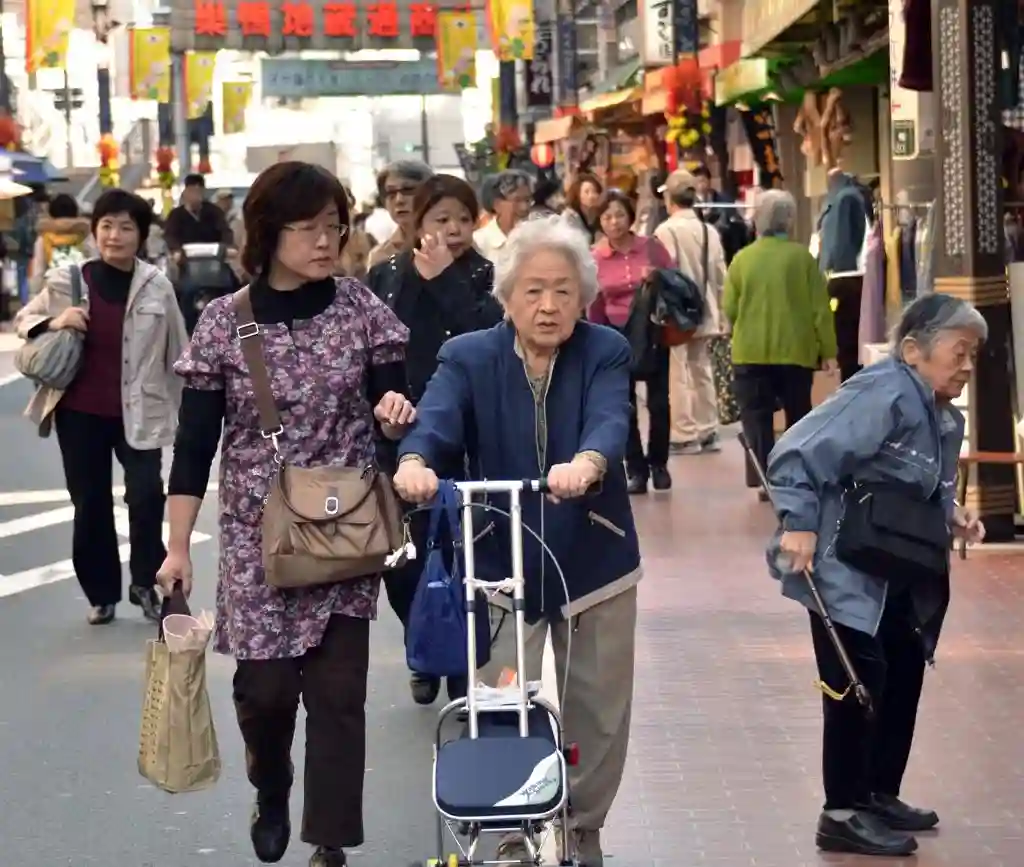
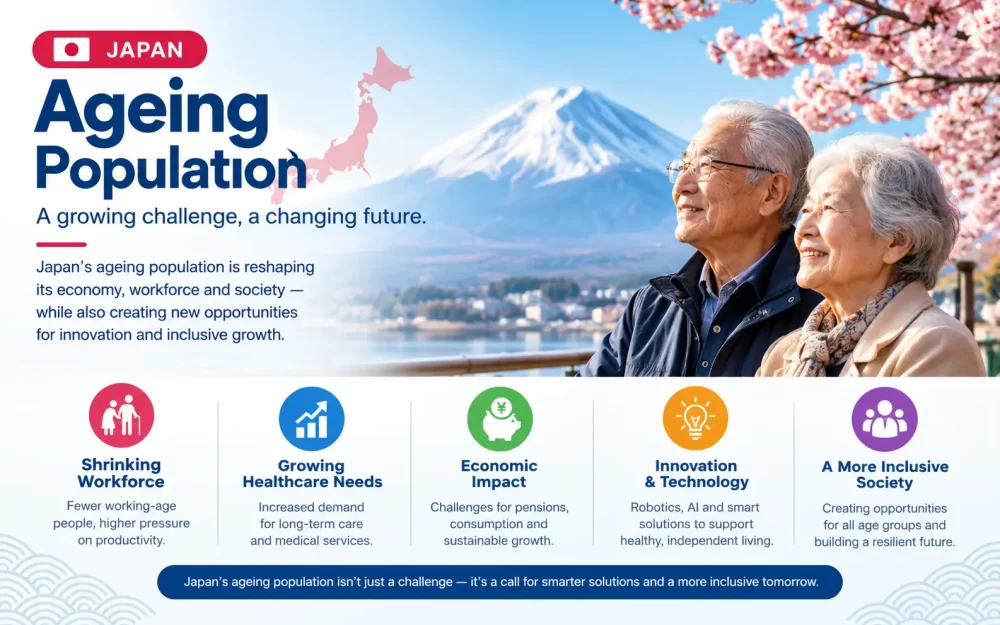
Japan ageing population has crossed a remarkable demographic milestone: more than 100,000 people in the country are now aged 100 or older. The record highlights Japan’s extraordinary longevity, but it also reflects a much larger demographic transformation involving falling birth rates, a shrinking workforce and rising pressure on healthcare and social-care systems.
According to Japan’s Ministry of Health, Labour and Welfare, the number of centenarians reached 107,677 as of September 1, 2026, an increase of 7,914 from the previous year. It is the 56th consecutive year that the number has increased and the first time the figure has crossed 100,000.
Japan’s Centenarian Population Reaches a Historic Level
Japan has been known for decades for its high life expectancy and large elderly population. However, the latest figures demonstrate just how significantly the country’s age structure has changed.
Of the 107,677 people aged 100 or older, 94,298 are women, representing about 87.6% of the total. The number of centenarians has increased dramatically since government statistics began in 1963, when Japan had just 153 people aged 100 or older.
The number crossed 1,000 in 1981 and 10,000 in 1998 before continuing its long-term rise.
Japan’s oldest woman in the latest figures is 114-year-old Fuyo Kishimoto of Kyoto, while the country’s oldest man is 112-year-old Hikaru Kato of Kumamoto, according to reports based on government data.
Why Are So Many People Living to 100?
There is no single reason behind Japan’s exceptional longevity. Researchers and officials point to a combination of healthcare, lifestyle, diet and social factors.
Japan has universal health insurance, giving residents broad access to medical treatment. The country’s traditional diet has also often been associated with relatively high consumption of fish, vegetables and rice and lower levels of saturated fat.
Physical activity can also remain part of everyday life for older Japanese people. Walking, cycling, public transport and community exercise activities are common aspects of life in many parts of the country.
Advances in medical technology and healthcare have also helped people survive illnesses that previously shortened lives. Japan’s health minister has cited improvements in medical technology, diet and lifestyle among factors contributing to longer and healthier lives.
The Other Side of Longer Lives
Living longer is generally considered a major achievement, but Japan’s demographic situation presents a complicated challenge.
The country is ageing while its birth rate is falling. Japan’s total fertility rate dropped to 1.14 in 2025, according to recently reported government data. That is substantially below the roughly 2.1 level generally associated with maintaining a stable population in the absence of migration.
At the same time, nearly three in every 10 people in Japan are aged 65 or older. Government projections indicate that the proportion could approach 40% by 2070.
This creates a major demographic imbalance: the number of older people needing pensions, healthcare and care services is increasing while the number of working-age people available to support those systems is declining.
Japan’s Shrinking Workforce
An ageing population becomes particularly challenging when it is accompanied by a shrinking working-age population.
Japan is already experiencing labour shortages in several sectors, including healthcare, social care, construction, agriculture and transportation.
The Japanese government’s ageing-society report projects that the working-age population could decline by around 12 million between 2020 and 2040.
For businesses, this can mean greater difficulty finding employees. For families, it can mean increasing responsibility for caring for older relatives. For the government, it means finding ways to finance pensions, healthcare and social services with a smaller working population.
More Elderly People Living Alone
Another important part of Japan’s ageing story is the changing structure of households.
As people live longer and families become smaller, more elderly people may find themselves living alone. Japan’s government has identified the growing number of older people living alone as one of the challenges that needs to be addressed as the country becomes increasingly aged.
This means that ageing is not simply about the number of people reaching 100. It is also about ensuring that older citizens have access to healthcare, housing, transportation, social connections and daily assistance.
What Does This Mean for the Japanese Economy?
Japan’s demographic shift is already affecting the economy.
A smaller workforce can make it harder for businesses to fill vacancies and maintain productivity. At the same time, public spending requirements can increase as demand for pensions, healthcare and elderly care grows.
Rural communities can face an additional challenge. Younger residents often move toward larger cities for education and employment, leaving some smaller communities with a disproportionately older population.
The result can be a cycle in which fewer young people support local businesses and public services, while demand for elderly services continues to rise.
Can Technology Help an Ageing Society?
Japan has increasingly looked toward technology as one part of the response to demographic change.
Automation, robotics and digital services can potentially help businesses deal with labour shortages. In healthcare and elderly care, technology can also assist workers with monitoring, mobility and routine tasks.
However, technology cannot replace every form of human support.
An ageing society still needs doctors, nurses, caregivers, family members, community workers and other professionals. Japan’s experience demonstrates that technological innovation may help address labour shortages, but social and economic adaptation is equally important.
Japan Is Not Alone
Japan is an extreme example of population ageing, but the broader trend is global.
The World Health Organization says global life expectancy has increased significantly over recent decades. The number of people aged 60 and older is projected to rise from 1.1 billion in 2023 to 1.4 billion by 2030.
Other countries, particularly in Europe and East Asia, are also experiencing declining birth rates and growing elderly populations.
Japan therefore provides an important case study for countries that are likely to experience similar demographic changes in the coming decades.
What Can Other Countries Learn From Japan?
Japan’s experience raises several questions that governments around the world may increasingly have to address.
How can healthcare systems support people who live longer? How should retirement ages change? How can countries maintain adequate numbers of workers? What support should families receive when caring for elderly relatives? And how can societies make sure that older people remain socially connected and economically active when they want to work?
Japan’s government has emphasized the need to build a society in which people of different generations can participate and receive support according to their circumstances. Its ageing-society policy also focuses on keeping older people active and creating systems that respond to changes in physical and cognitive abilities.
A Milestone With a Bigger Message
Japan’s 107,677 centenarians represent an extraordinary achievement in longevity. But the milestone also tells a much bigger story.
People are living longer, while fewer children are being born. As a result, societies must rethink employment, retirement, healthcare, housing, family structures and social security.
For Japan, the challenge is no longer simply helping people live longer. It is creating a society in which people can live longer, healthier and more independent lives while maintaining a sustainable balance between generations.
The record number of centenarians is therefore both a celebration of human longevity and a warning of the complex demographic challenges that can accompany it.
Key Facts
- 107,677 people aged 100 or older live in Japan as of September 1, 2026.
- The number increased by 7,914 from the previous year.
- Women account for approximately 87.6% of Japan’s centenarian population.
- Japan has recorded a rise in its centenarian population for 56 consecutive years.
- Nearly 30% of Japan’s population is aged 65 or older.
- The share of people aged 65 and above is projected to approach 40% by 2070.
- Japan’s fertility rate fell to 1.14 in 2025.
- The global population aged 60 and older is projected to reach 1.4 billion by 2030.
Japan’s record number of centenarians is more than a statistic. It offers a glimpse into the future of ageing societies around the world and the economic, social and healthcare questions that come with longer lives.
FAQs About Japan’s Ageing Population
1. How many centenarians are there in Japan in 2026?
Japan has 107,677 people aged 100 or older as of September 1, 2026, according to Japan’s Ministry of Health, Labour and Welfare.
2. Why does Japan have so many people aged 100 or older?
Japan’s high longevity is associated with factors including broad access to healthcare, diet, lifestyle, medical advances and relatively high life expectancy.
3. What percentage of Japan’s population is over 65?
Nearly 30% of Japan’s population is aged 65 or older, making Japan one of the world’s most aged societies.
4. Why is Japan’s population ageing so rapidly?
Japan is experiencing a combination of low birth rates, longer life expectancy and a declining working-age population, resulting in a growing proportion of elderly people.
5. What is Japan’s fertility rate?
Japan’s total fertility rate fell to 1.14 in 2025, according to recently reported government data.
6. How will Japan’s ageing population affect its economy?
An ageing population can contribute to labour shortages, higher healthcare and social-care costs, increased pension spending and pressure on public finances.
7. Can technology help Japan deal with its ageing population?
Yes. Robotics, automation and digital technologies can potentially help address labour shortages and support healthcare and elderly-care services, although technology cannot replace all forms of human care.
8. Is Japan the only country facing an ageing population?
No. Many countries, particularly in Europe and East Asia, are experiencing declining birth rates and increasing life expectancy. Japan is one of the most prominent examples of this demographic transition.