Fauna
Neelakurinji Bloom 2026: Munnar Hills Turn Violet After 12 Years

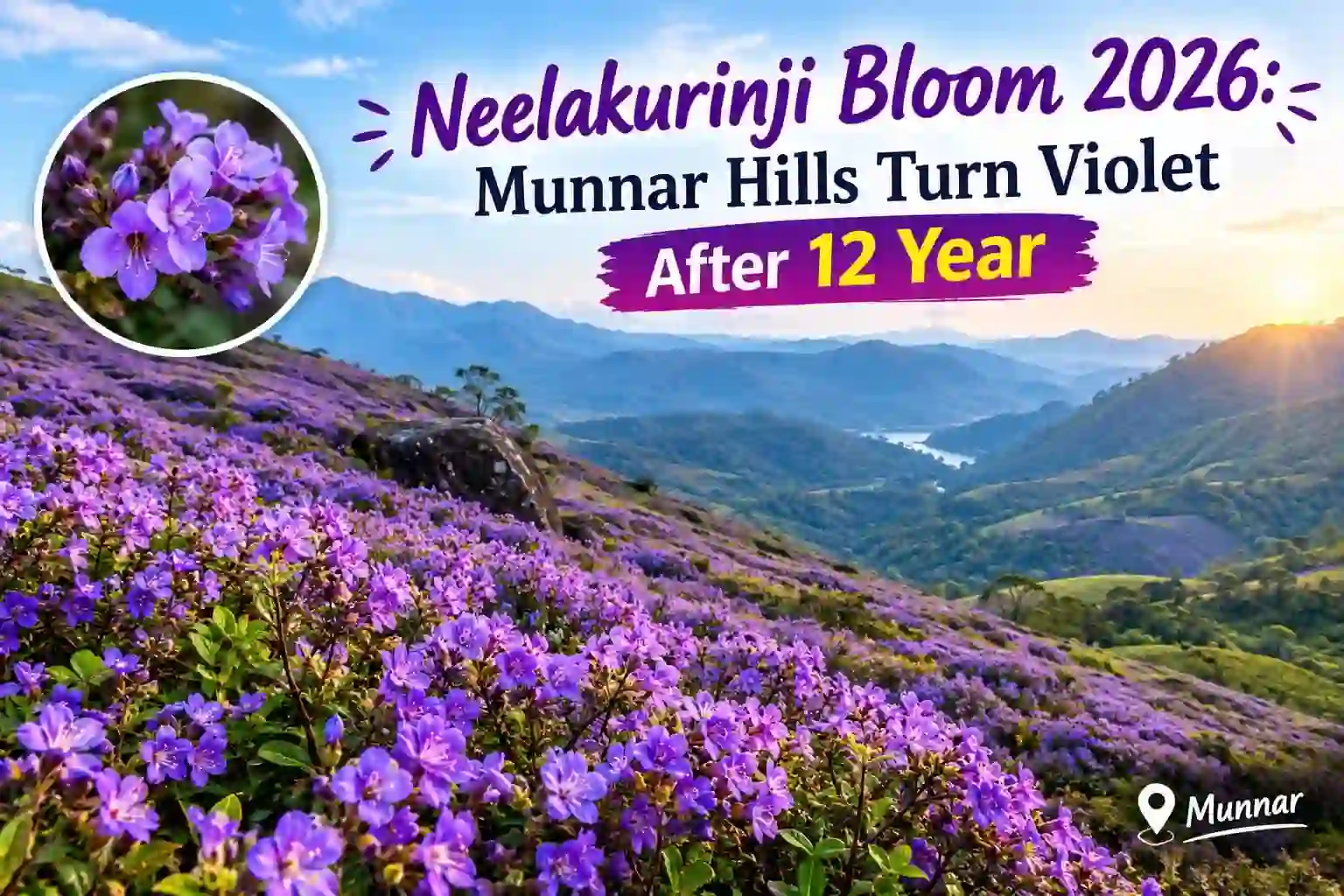
Neelakurinji Bloom 2026 has transformed parts of Munnar in Kerala into a spectacular blue-violet landscape. The rare Neelakurinji (Strobilanthes kunthiana) flowers are blooming across parts of the Chokramudi and Mattupetty-Korandakkad hills, attracting nature lovers, photographers and travellers to the Western Ghats.
The flowering is particularly special because certain populations of Neelakurinji follow a cycle of approximately 12 years. Kerala Tourism records flowering in the Mattupetty-Kannimala region in 1990, 2002 and 2014, with the next flowering expected in 2026. Current reports indicate that the 2026 bloom has now appeared around Chokramudi and Mattupetty-Korandakkad.
What Makes Neelakurinji So Special?
Neelakurinji is a flowering shrub associated with the high-altitude grasslands of the Western Ghats. Its scientific name is Strobilanthes kunthiana, and its distinctive violet-blue flowers are one of the most recognisable natural attractions of the Munnar region.
Unlike plants that flower every year, certain Neelakurinji populations have a much longer flowering cycle. When the plants flower together, entire sections of the hills can appear covered in shades of blue, violet and purple.
The phenomenon is therefore not simply a seasonal flower display. It is a rare ecological event that occurs on a much longer natural timetable.
Where Can You See Neelakurinji in Munnar?
Travellers hoping to experience the Neelakurinji Bloom 2026 can look for flowering areas around:
- Chokramudi Hills
- Mattupetty
- Korandakkad
- Other suitable high-altitude areas around Munnar
However, the flowering intensity may differ from one location to another. Visitors should check current local tourism and forest department information before planning a particular trek or entering any natural area.
Neelakurinji Honey: Another Interesting Connection
The Neelakurinji flowering season also brings attention to another natural product associated with flowering landscapes – honey produced by bees that forage on flowering plants.
During a major flowering event, bees have access to large quantities of floral nectar. Honey produced from nectar collected predominantly from a particular floral source can be described as monofloral honey when the required botanical predominance is established through appropriate testing.
This is why the idea of Neelakurinji honey is particularly interesting during the flowering season. Honey sourced from areas where Neelakurinji is flowering may be marketed or described in connection with the bloom, but the exact floral origin of any honey should not be assumed simply because Neelakurinji is growing nearby.
The botanical origin of honey can be assessed using scientific methods, including pollen analysis and other laboratory techniques. Research has also explored the classification of honey according to its botanical and geographical sources.
What Does Neelakurinji Honey Taste Like?
The flavour of honey depends on several factors, including the flowers visited by bees, the surrounding vegetation, location, season and processing methods.
Therefore, honey collected during the Neelakurinji flowering season may have a distinctive local character, but it would be inaccurate to say that every jar labelled “Neelakurinji honey” has exactly the same flavour or composition.
Visitors to Munnar may encounter locally produced honey and other forest-related products, but consumers should check the source, producer and labelling before purchasing.
Is Neelakurinji Honey Medicinal?
Neelakurinji honey is sometimes discussed in connection with the natural and traditional value of the Munnar landscape. However, claims that it has unique medicinal or therapeutic properties should be treated carefully.
Honey itself is a naturally occurring food containing sugars and other compounds, but that does not automatically establish specific medical benefits for honey associated with Neelakurinji flowers.
At present, there is not enough reliable evidence to present Neelakurinji honey as a proven treatment for any disease or medical condition. It is better understood as an interesting specialty honey associated with a unique flowering environment rather than as a medicine.
Why the 12-Year Cycle Matters?
The long flowering cycle is one of the most fascinating aspects of Neelakurinji.
The plants spend years growing before flowering. During a mass flowering event, numerous plants bloom around the same period, eventually producing seeds and completing their reproductive cycle.
This unusual biological strategy helps explain why a Neelakurinji-covered hillside is such a rare sight.
The species is closely associated with the high-altitude ecosystems of the Western Ghats, making conservation of its habitat particularly important.
Neelakurinji and the Biodiversity of the Western Ghats
The Western Ghats are known for their rich biodiversity, and Munnar’s mountain ecosystem provides habitat for numerous plant and animal species.
The Neelakurinji bloom brings temporary attention to this larger ecosystem. The colourful flowers may be the most visible part of the phenomenon, but the surrounding grasslands and forests are equally important for maintaining ecological balance. The wider world of plant biodiversity also includes remarkable examples of unusually tall plants, such as the tallest coriander plants in the world.
Protecting these habitats is essential because changes in land use, human activity and other environmental pressures can affect sensitive high-altitude ecosystems.
Responsible Tourism During Neelakurinji Bloom 2026
The popularity of the Neelakurinji Bloom 2026 is likely to bring more visitors to Munnar’s flowering areas.
Tourists can help protect the landscape by following a few simple practices:
- Do not pick Neelakurinji flowers.
- Avoid walking over flowering plants.
- Do not litter in the hills or forests.
- Stay on designated trails wherever required.
- Follow instructions from forest and local authorities.
- Avoid entering restricted areas for photographs.
- Do not disturb bees, wildlife or other insects.
- Choose responsible local tourism operators.
The need for responsible behaviour has become especially important because there have already been reports of visitors entering restricted areas to photograph the rare flowers.
Best Time to Experience the Bloom
The exact duration and intensity of flowering can vary between locations. Current reports from September 2026 indicate that the flowers are visible around parts of Chokramudi and Mattupetty-Korandakkad.
Travellers should therefore check the latest local updates before making a trip specifically to see the flowers.
Why Munnar Is Turning Blue and Purple
The sight of Neelakurinji covering mountain slopes is the result of thousands of plants flowering around the same period.
For visitors, the combination of Munnar’s hills, mist, tea plantations and blue-violet flowers creates a remarkable landscape. For scientists and conservationists, however, the bloom is also an opportunity to draw attention to the ecological importance of the Western Ghats.
The 2026 flowering is therefore both a tourism attraction and a reminder of the importance of preserving natural habitats.
Neelakurinji Bloom 2026: A Rare Natural Experience
The Neelakurinji Bloom 2026 has once again placed Munnar in the spotlight. The appearance of the rare blue-violet flowers around Chokramudi and Mattupetty-Korandakkad offers travellers a limited opportunity to witness a natural phenomenon associated with a roughly 12-year flowering cycle.
The connection between the bloom, local biodiversity and products such as naturally sourced honey adds another interesting dimension to the story. However, visitors should enjoy the phenomenon responsibly and avoid damaging the flowers or their habitat.
For anyone planning a Kerala trip this season, Munnar’s Neelakurinji-covered hills could provide one of the region’s most memorable natural experiences.
Conclusion
The Neelakurinji Bloom 2026 has transformed parts of Munnar into a breathtaking blue-violet landscape, offering visitors a rare opportunity to witness nature’s remarkable 12-year flowering cycle. Beyond its beauty, the bloom highlights the rich biodiversity of the Western Ghats and the ecological importance of protecting Munnar’s fragile mountain habitats.
The association of the flowering season with locally sourced honey also adds an interesting dimension to the experience, although claims about special medicinal benefits of Neelakurinji honey should be approached with caution. Visitors can enjoy this rare spectacle while supporting responsible tourism by protecting the flowers, avoiding litter and following local forest and tourism guidelines.
For nature lovers and travellers, the Neelakurinji Bloom 2026 is more than a beautiful sight-it is a reminder of the extraordinary natural cycles and biodiversity that make Munnar unique.