Bengaluru: Manohar, 39, works as an electrician in a private firm.
He lives with his family in Ramachandrapura of Ward 96 in Benagluru with his old parents, wife and two children who are seven and 11 years old. With the COVID-19 pandemic sweeping India and Bengaluru, his family too developed symptoms such as dry cough, fever and sore throat.
The family was tested for COVID-19 by the Bruhat Bengaluru Mahanagara Palike (BBMP) on July 20. While Manohar, his wife and his mother tested positive, his father and the children tested negative.
The Centre for Advocacy and Research (CFAR) has been working with urban communities in various cities of India through the pandemic and the nationwide lockdown to support them with their food and other needs. CFAR has been working with communities in Bengaluru to support both the government and communities in fighting COVID-19.
In the case of Manohar’s family, CFAR arranged for an ambulance which took the infected members of the family to a COVID-19 Care Centre. It was found that Manohar had been in touch with his brother-in-law, who was tracked by the CFAR Helpdesk team, tested, and was detected positive.
Manohar and his wife were shifted to CCC Gnana Bharathi Girls Hostel at Majestic, while his mother was admitted into a private hospital, the Cinnacle hospital, located on Mysore road. The private hospital charged a whopping Rs. 1.66 lakh while the treatment for Manohar and his wife at the CCC Hostel was free.
Manohar and his wife were at the CCC Hostel for four days and described their experience to be ‘good’. Although the facility could be better-maintained, and conveniences and essentials such as beds and toilets could improve, the food was okay and overall the place was ‘manageable’. On the fifth day they returned home.
They were told to be in home quarantine for a few more days.
However, all family members did not go through the same experience as Manohar and his wife. While his father had tested negative in the first test, he later developed severe asphyxiation. However, he was denied admission by many hospitals as ICU beds were not available. Finally, he was admitted to the Cinnacle hospital for treatment where he tested positive for COVID-19.
His oxygen saturation was recorded to be at 60 Per cent. He was doing well for four days but his condition deteriorated and he succumbed to his illness. Around the same time, Manohar’s brother-in-law also passed away due to severe breathing problems.
In this period of extreme privation and distress, the family received ration from lorry drivers’ association, private cab drivers’ association and the BBMP. After they were discharged from the hospital, vitamin tablets were given to them by CCC Hostel health workers.
Once they returned home, the children faced discrimination as neighbours stopped talking to them even after they tested negative. The owner of the bakery shop in front of their house abused them several times when they passed by or visited the shop to buy household items. Manohar urged health workers to do something about it, asking them to educate people not only on the transmission of the virus, how to protect oneself and the benefits of getting tested at the earliest, but also on why a person who recovers and tests COVID-negative should not be discriminated against.
Despite all the odds they have faced, especially losing their near and dear ones, Manohar and his family have resumed their normal lives and are no longer afraid of the virus or the tests!
MEDIA RELEASE
]]>Boost your immunity with the right nutrients – a detailed guide
Focus Areas
The Centre for Advocacy and Research (CFAR) is focusing on reaching out to urban poor communities in six wards to strengthen both prevention and early management of the pandemic, where needed. These six wards, viz. Binnipete-121, Subhash Nagar-95, Oklipuram-96, Nayandahalli-131, Nagarabhavi-128 and Deepanjali Nagar-158 of West Zone have 143,935 population and comprise communities involved in a range of informal work such as daily wage labourers, construction workers, street vendors, garment workers and paurakarmikas (sanitation workers) and domestic workers. These six wards are serviced by five Primary Health Centres (PHCs) located at Magadi Road, Subhash Nagar, Srirampuram, Gangondanahalli and Panthrapalya.
Approach
For both prevention and early management of COVID-19 in an effective and saturated manner, the consortium of partners that includes the health system, non-profit organizations working in the space of health care and support and in strengthening community engagement with the support of Azim Premji Foundation has to ensure an integrated response. This means a seamless continuum of processes from disseminating correct information, developing evidence through line listing of persons at high risk and household survey and through consistent tracking and support to outreach workers, healthcare providers working with Mercy Mission and the five PHCs. All this has to be then followed up by facilitating testing at camp or booth in their neighbourhood, arranging proper institutional quarantine, where possible in COVID Care Centres near the slums and in effective containment and sanitization of the area and in providing post-COVID support to those recovering from it.
Step to be taken for an integrated response –
Reaching out to target population
In keeping with the above model of an integrated solution, we have to ensure that correct information reaches 29,235 urban poor households which have a population of 121,120 persons and, thereafter, with the support of the community mount, a collective effort to manage and contain the pandemic. As stated above, an integrated response of this kind requires multi-stakeholder partnership and collaboration with civil society organisations (CSOs), government, urban local bodies and primary health centres (PHCs) and frontline service-providers.
Facilitating screening and testing
Integration of the response at the ground level is being shaped with the support of Mercy Mission, a charitable healthcare organization, and the Primary Health Centres. Mercy Mission has set up six field booths where a team of health workers do the primary screening by checking body temperature, oxygen level and blood pressure. The Mercy Mission has also set up an oxygen cylinder service in Binnipete Ward to address emergencies such as oxygen deficiency. The medical team from the PHC is not only testing at the centre but also at the camps with a team consisting of one swab collector, one data entry operator and one auxiliary nurse midwife (ANM). The camps are organized by CFAR and the Helpdesk team.
Shaping community facilitation
The intervention is facilitated by CFAR, and at the community level managed by a Helpdesk in each settlement which is staffed by volunteers drawn from the community. Each Helpdesk team has to reach out to 500 households with all the services the community requires, including correct information about the virus and ways to contain it. The Helpdesk team is also supported by local stakeholders like Councillors, Ward Committee members and other community representatives, including family members who are willing to volunteer their service.
Training the volunteers
The Helpdesk volunteers were trained by experts from Azim Premji Foundation. The Foundation has provided communication collaterals such as flip charts, information kits, handbooks, bags, badges and jackets to the team. As a token of appreciation, the 240 frontline workers are also being provided a meal once a week.
Conducting household survey
To streamline the whole process and achieve both scale and quality, CFAR is also conducting a household survey with researchers drawn from the community. The survey will capture all COVID-19 and health-related details, in particular co-morbidities of members of 29,235 households. This will enable the teams to plan the outreach to the households scattered over 37 settlements and at the same time give focussed attention to those who are most at risk, and ensure that all people in and around them take all advised precautions. In other words, we are striving not only to contain the pandemic but also save lives.
Disseminating right information
Armed with all these aids and materials, the Helpdesk members visit each household and create awareness on the Coronavirus. They check the oxygen level and temperature of people and refer those with symptoms for testing. Once a person tests positive, CFAR supports them in either self-isolating at home or getting quarantined at the COVID Care Centre.
Current status-from 8-31 August, 2020
Persons reached out to
In the last one month, the team has reached out to 12,879 persons spread across 37 settlements. With the help of doctors and nurses of 5 PHCs, the Helpdesk members conducted 163 camps at the settlements. This resulted in 11,728 persons getting tested, with the Rapid Antigen Test accounting for 4,026 and RT PCR for 7,702 tests. As many as 175 persons tested positive. Of them, 125 were counselled and 24 were shifted to the COVID Care Centre. The families of COVID-positive persons were also immediately connected with the dry ration kit support which was being provided by BBMP.
Demonstrating efficacy
Over the last five years, with CFAR having earned the trust of the community and the health system, it has been possible to create a strong community-centred intervention in the six wards. The community-led intervention has, in the past one month, demonstrated that by reaching out to people and by educating them about the virus, while disseminating correct information, the growing practice of stigmatizing and discriminating against those affected by or associated with the virus is slowly reducing. This is enabling the community to come forward to get screened, tested, quarantined and finally declared free of the disease. Holding camps at the settlement has made a difference. People are assured that even if somebody tests positive, all the providers from PHCs, Mercy Mission, CFAR and the Helpdesk team will take care of them, including arranging for an ambulance to take them to the COVID Care Centre, and see them through the whole experience from being COVID-positive to being COVID-negative.
Speaking about this, Prabhanand Hegde, State lead, CFAR, said: “We know from our experience that urban poor communities, when organized and empowered, not only become a part of the solution but also pave a pathway for others to emulate and follow.”
Radha K, Outreach Worker, Sahaya Single Window
We have been working with these households from the time the pandemic began and the government announced nationwide lockdown. During this period, we facilitated distribution of food relief to the households across 53 wards.
The teams from CFAR and Helpdesk are reaching out to each household, informing them about COVID-19, counselling those who are feeling scared or overwhelmed by it, and connecting them to proper medical services. We are motivating them to get tested at the earliest, and after that we ensure that they either self-isolate at home if it is possible, or get them admitted to the COVID Care Centre without any hassle. We also support their families in getting the ration kits provided by BBMP.
MEDIA RELEASE
]]>
Recent Highlights of lockdown and coronavirus:
- Partial upliftment of lockdown in the state capital by Delhi Government.
- Only essential services allowed, nationwide lockdown to act till May 3.
- ICMR requests faulty kits to be shipped back to China, suggests halting further procurement.
- Vaccine candidates enter trials worldwide.
The Delhi government has decided to partially relax the continuing lockdown. It decided to open some amenities in the capital. Delhi has seen more than 3,000 coronavirus cases to date.
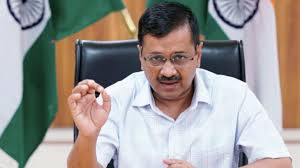
The Kejriwal government has allowed a few services to start functioning from 28th April. These include pathological laboratories, book stores, and plumbing services.
Delhi Disaster Management Authority (DDMA) has also permitted inter-state travel for health workers, lab technicians, and scientists.
The number of containment zones in Delhi is now at 99. There have been 54 deaths reported with over 3,100 coronavirus cases. The Delhi government still announced the easing of the lockdown. Though it is partial and the lockdown will continue till May 3 till further correspondence is made.
A list of services being opened up amid the partial easing are:
- Inter and intrastate movements by all healthcare workers and scientists have been permitted, including by air if necessary.
- Healthcare: Dispensaries, clinics and pathological laboratories, sale, and supply of vaccine and medicine, and Vet hospitals.
- Shelter homes for children, disabled, mentally challenged, senior citizens, destitute, women, and widows.
- Self-employed persons such as electricians, plumbers or those repairing water purifiers can start providing their services
- Electric fan shops have been allowed to open.
- School books shops selling educational books are also allowed to open.
The nationwide lockdown that started on March 25 was extended till May 3 as the cases rose to an all-time high. MHA issued a set of thorough guidelines for all states and Union Territories to follow a day after.
The Delhi government has declared some relaxations after scrutinizing the COVID-19 situation in the state.
Meanwhile, the Indian Council For Medical Research has urged the state governments to halt the further acquisition of rapid antibody test kits. The results were not found satisfactory and many kits were deemed faulty. China has been shipping these kits to India. But so far the results of these kits have been dismal. ICMR suggested that these faulty kits be shipped back to China.
There has also been news that human trials have begun for coronavirus vaccine. There are at least seven vaccine candidates that have entered into trials across the world.
Such developments take many experiments and go through various stages. Usually, developing a cure might take up to a decade. But seeing the merciless onslaught of the COVID-19 virus, scientists are forced into taking shortcuts to develop the vaccines. Yet, the timeline is set at 1.5 years, according to experts.
In India, firms are engrossed in pre-clinical research for vaccine development. Ahmedabad based Pharma major Zydus Cadila along with Hyderabad-based biopharma firm Biological E Limited and Pune-based vaccine manufacturer Serum Institute of India are leading the research.
Stay home, stay safe, and follow the protocols to protect yourself and your loved ones.
Sourced from India Today
]]>Recent highlights on China and COVID-19:
- China has thrashed the proposals for an international probe into the origin and spread of Coronavirus.
- Chinese foreign ministry believes accountability is not important, the prevention of further damage is.
- The Chinese government has also treated economic backlash on Australia as it pushes for a review of the Wuhan situation.
- Furthermore, the last COVID-19 patient from Wuhan hospital has been discharged.
It has been a while since the WHO meeting for reviewing the COVID-19 situation in China. Long story short, Australia called for a review meeting on the origin and spread of the COVID-19. Australia has been pushing all the world leaders and the members of the WHO for opening up an investigation into the coronavirus origin and spread. This is a proposal that has been vehemently opposed by the Chinese Government.
China, in lieu of the proposal, has also made threats of economic damage to Australia. The Chinese ambassador to Australia has said that people from china “could very easily avoid” products and universities of Australia. The ambassador, Cheng Jingye, said in a published interview that Chinese commoners will question the need for consuming Australian beef and wine, reconsider visiting Australia, and getting admission into Australian universities. For those of you who aren’t aware, tourism and exports are very important factors in Australia’s economy.

COVID-19 cases in China.
Source: Google
It is surprising that China would make such a threat in times when global cooperation is what we need. Regardless, Australian Foreign Minister Marise Payne warned China not to make such threats of economic coercion. He stands firm that Australia’s proposal for a probe was a moral call and based on principles. He has greatly emphasized that the response from China was undesirable and tactless.

Covid-19 cases worldwide, China.
Source: Google
Along with Australia, the US, UK, and Germany have also been pushing for an international probe. China has been constantly dodging the probe saying it will not be conclusively, just like those conducted in the past. Chinese Foreign Ministry spokesman Geng Shuang insist on it being left to scientists and professionals. Geng said that the aim should be to find out how it occurs and prevent further damage. Accountability is not important right now, according to him. He believes that politicizing the issue of origin will only hamper international trust and cooperation.
Additionally, the last COVID-19 patient of Wuhan has finally been discharged. There has been no new case in the epicenter of the global pandemic. It had been a three-month-long war against coronavirus. The virus infected more than 80,000 people in China while death tolls stand at 4,642. The numbers in Wuhan have been on the decline since February 18.
]]>Sab log keh rahe hain ki
Desh 40 saal peeche chala gaya hai,
Main bata rahi hoon…
Main dobara school Nahi Jaaunga!!! 
This danger will remain for a long time.
Barber rubs the nose of at least 4 to 5 people with a towel. The head of the US Department of Health J. Anthony has said that 50 percent of the deaths in the US have happened in the same way that came in saloons.
If we come in contact with the infected patient, the ticket is sure to be cut. We cannot even think of going to a salon and getting a haircut until the corona is completely over. Barber will be in contact with many people.
Barber’s towel, barber’s razor barber brush, chair, etc. are used by many people. The threat will remain even after the situation returns to normal. Be careful.
]]>According to a preliminary study posted on medRxiv, the countries which have mandatory policies to vaccinate against tuberculosis have registered fewer coronavirus deaths than countries that don’t have vaccination policies. This study has now found a correlation between the countries that require citizens to get the bacillus Calmette-Guerin (BCG) vaccine and those showing the fewer number of confirmed cases and deaths from COVID-19. However, a randomized clinical trial (RCT) is required to determine this. In line with this RCTs in healthcare workers are on-going in the Netherlands and Australia.
However, there are still some caveats to the study. Firstly heterologous immunity induced by BCG has predominantly been shown to last for nearly 2 years. Since BCG vaccination is predominantly administered to infants and children, BCG-associated heterologous immunity may not be responsible for reduced COVID-19 morbidity in adults and the elderly.
Even though these caveats and RCTs are taking place in Netherlands and Australia to determine if BCG confers heterologous immunity against COVID-19, however, these results will still be confounded by the different epidemic control strategies implemented by each country. Further epidemiological results presented by Miller et al., can be “confirmed” by testing the hypothesis when the epidemic “matures” in low-income countries.
About BCG Vaccine
The Bacillus Calmette-Guérin (BCG) vaccine is one of the most widely used vaccines in immunization of more than 80% of neonates and infants in countries where childhood immunization is a part of the national program. The benefits of the vaccine have been well documented in the treatment of diseases like meningitis and disseminated TB in children. The BCG vaccine is considered only for very select persons who meet specific criteria and in consultation with a TB expert.
The BCG vaccine which most Indians are given at birth and is used to prevent Tuberculosis is now being considered to healthcare workers to protect them in their fight against coronavirus.
Does BCG protect against novel coronavirus?
The trials for BCG vaccine kick-started a week ago and is being carried out by the children hospital in Australia and their colleagues in Netherlands and Germany. In the initial trials, it was found that in the first year of life BCG vaccine besides its protection against TB was found to be protective against other viruses similar to SARS-CoV-2: There was a reduction in the severity of symptoms. The trials on the effectiveness of the BCG vaccine have also been expedited in order to buy time until the new vaccine for SARS-COViD19 – becomes available.
Vaccines generally raise immune responses specific to a targeted pathogen, such as antibodies that bind and neutralize one type of virus but not others. But BCG may also increase the ability of the immune system to fight off pathogens other than Mycobacterium tuberculosis.
BCG, can remain alive in the human skin for up to several months, triggers not only Mycobacterium-specific memory B and T cells, but also stimulates the innate blood cells for a prolonged period. It may also enable improved resistance to fight infections in the elderly. It is very clearly outlined that vaccine probably won’t eliminate infections with the new coronavirus completely, but is likely to dampen its impact on individuals.
BCG had in the past been found to demonstrate a non-specific protective effect against infections in children, particularly respiratory infections. Furthermore, vaccines for measles and oral polio are too thought to have non-specific beneficial effects on some infections. Therefore, there is a possibility that BCG could reduce the intensity of SARS-CoV-2 infection by stimulating the memory of innate immunity.
Currently, there are no proven studies or reports which validate the effectiveness of the BCG vaccine in the treatment of coronavirus. Scientists have contended that it will still take several months to get results from trials testing the BCG vaccine to fight COVID-19. In the past, the BCG vaccine was considered to be protective against SARS too – so, we need more evidence and science to understand the protective effect against COVID 19. This may be particularly useful for front line workers to reduce the severity of the infection with COVID 19.
Authored by Dr. Swati Rajagopal, Consultant, Infectious Diseases & Travel Medicine, Aster CMI Hospital
]]>Wo ek message aata tha na ke ghar baithe baithe mahine ka ₹40000-45000 kamayein!
Kisi ke paas uska number hai kya?
]]>(1) Dry cough + sneeze = air pollution
(2) Cough + mucus + sneeze + runny nose = common cold
(3) Cough + mucus + sneeze + runny nose + body ache + weakness + light fever = flu
(4) Dry cough + sneeze + body pain + weakness + high fever + difficulty breathing = coronavirus
]]>
Waqt to phir waqt hai, guzar hi jayega,
Aaj nahi to kal sab theek ho hi jayega,
Kal tak waqt ki kami thi,
Zindagi jaane kis raftaar se bhaag rahi thi,
Aur hum uske peeche.
Ye jo din beet rahe hain, inhein khwaab main dekha tha,
Haqeeqat main har kisi ko waqt se kitni shikayat thi,
Kahin kuch rahaat ke pal naseeb hon,
Kuch waqt mile apnon ke saath guzaarne ka
Bachon ke saath baith kar wo bachapan ke khel khelne ka,
Ek dusre ka kaam main haath batane ka,
Doston se fursat main baat karne ka,
Aaj Waqt ruka hai,
To hum kyun ruk nahi paa rahe,
Kyu bechain ho,
In palon ko jee nahi pa rahe,
Kal kya hoga kon jaanta hai,
Jo hoga acha hoga,
Ye yaqeen khud par rakhna hai,
Apnon ka khayal rakhna hai,
Aur zara sa hausla rakhna hai,
Waqt to phir waqt hai,
Chahe jitna bhi bura ho,
Guzar hi jayega….
We don’t know who the Writer is but is a Superb summation of present times.
]]>